❋ Wood ash glaze
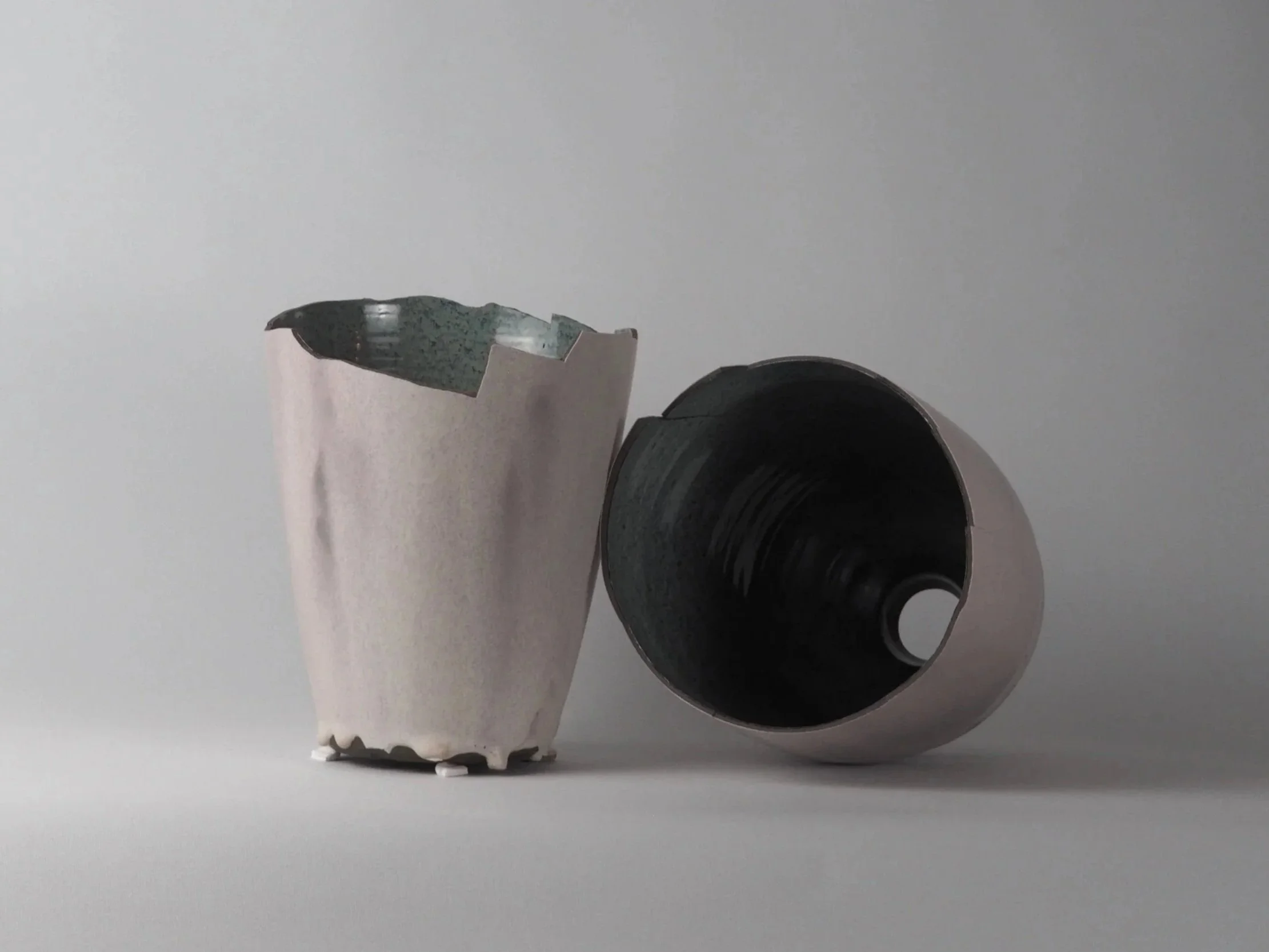
This ceramic vase is the product of a glaze development spanning a few months.
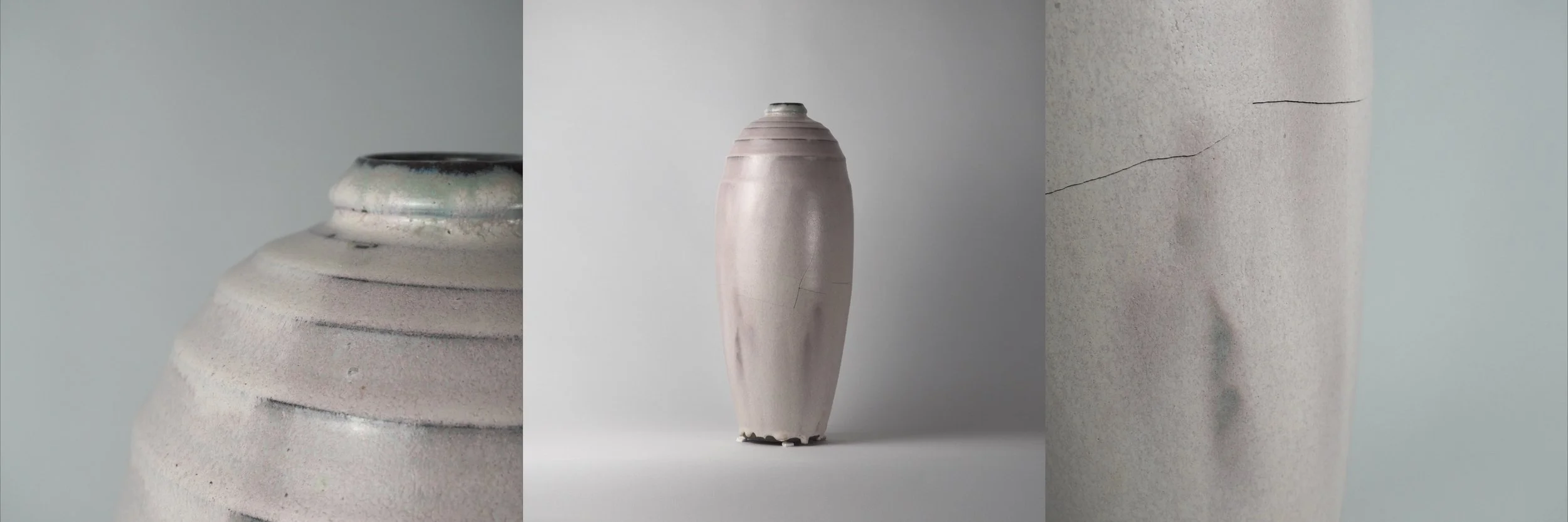
After the test tiles promised the hoped-for outcome, I decided to glaze a big piece right away — which is almost never a good idea, since glazes tend to behave differently on bigger pieces, as more glaze accumulates. In this case, the glaze kept its promised look and, in combination with an anthracite clay beneath, evolved into a pink and purple colour — which I quite like. However, as the photo to the right shows, one issue appeared: a crack.
Since a crack isn't necessarily the result of a deficiency in the glaze, I tested it again on a test mug thrown with the same wall thickness. And like the vase, it cracked as well. Therefore, I came to the conclusion that the clay and the glaze have different tensions while being fired in the kiln, resulting in a crack in the ceramic object.
This might seem like a big setback or a frustrating result, but failing is part of the making process, and outcomes like this teach important lessons. This means the glaze recipe still needs some refinement, but that's all part of the process of finding a formula that truly works.